

John Keats
Robert Davreu (Traducteur)Claude Mouchard (Préfacier, etc.)/5 12 notes
John Keats n'est pas seulement comme le souligna Mallarmé l'auteur de maint poème pur, ardent, musical. Ilécrivit également une éblouissante correspondance, dont seules des bribes avaient été jusqu'ici traduites enfrançais.Au fil des jours, on voit Keats inventer un genre : la lettre journal. Pour ses frères l'un cloué au lit par latuberculose, l'autre parti en Amérique il rédige des lettres qui,... >Voir plus
Robert Davreu (Traducteur)Claude Mouchard (Préfacier, etc.)/5 12 notes
Résumé :
John Keats n'est pas seulement comme le souligna Mallarmé l'auteur de maint poème pur, ardent, musical. Ilécrivit également une éblouissante correspondance, dont seules des bribes avaient été jusqu'ici traduites enfrançais.Au fil des jours, on voit Keats inventer un genre : la lettre journal. Pour ses frères l'un cloué au lit par latuberculose, l'autre parti en Amérique il rédige des lettres qui,... >Voir plus


étiquettes
Ajouter des étiquettes
Que lire après Lettres à Fanny Brawne et autres correspondantsVoir plus



Critiques, Analyses et Avis (1)
Ajouter une critique

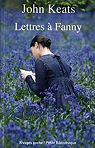
Résumé : Cet ouvrage rassemble 37 lettres écrites par le poète romantique anglais John Keats, à sa fiancée Fanny Brawne. John est contraint par la maladie à se rendre sur l'île de Wight, d'où il écrit à Fanny. Nous pouvons regretter de ne pas avoir le retour de la demoiselle. En effet, les lettres écrites par celle-ci ont été jalousement détruites par le poète. L'auteur livre son coeur et son âme dans ses lettres, si bien que l'on a presque honte de lire tellement elles sont personnelles. La beauté de cet ouvrage n'a d'égale que celle des poèmes de son auteur.
Le mot de la fin : Keats parvient à nous faire ressentir les mêmes émotions que lui : on souffre avec lui et on aime avec lui. Un ouvrage pur où les sentiments sont plus que sincères et la douleur plus que réelle. A lire et à relire et à rerelire pour garder espoir en la nature masculine, capable de profondeur et de mots tellement beaux !
Le mot de la fin : Keats parvient à nous faire ressentir les mêmes émotions que lui : on souffre avec lui et on aime avec lui. Un ouvrage pur où les sentiments sont plus que sincères et la douleur plus que réelle. A lire et à relire et à rerelire pour garder espoir en la nature masculine, capable de profondeur et de mots tellement beaux !
Citations et extraits (3)
Ajouter une citation

Saison des brumes et de savoureuse abondance,
Amie intime du soleil qui mûrit,
Conspirant avec lui à charger et bénir
De fruits les treilles qui courent le long des toits de chaume ;
A courber sous les pommes les arbres moussus des enclos
Et combler tous les fruits de maturité juqu’au coeur,
A faire enfler la courge et s’arrondir la coque des noisettes
D’une tendre amande ; à faire bourgeonner encore,
Et encore, des fleurs tardives pour les abeilles,
jusqu’à ce qu’elles croient que les tièdes journées ne finiront jamais
Tant l’été a gorgé leurs humides alvéoles.
Amie intime du soleil qui mûrit,
Conspirant avec lui à charger et bénir
De fruits les treilles qui courent le long des toits de chaume ;
A courber sous les pommes les arbres moussus des enclos
Et combler tous les fruits de maturité juqu’au coeur,
A faire enfler la courge et s’arrondir la coque des noisettes
D’une tendre amande ; à faire bourgeonner encore,
Et encore, des fleurs tardives pour les abeilles,
jusqu’à ce qu’elles croient que les tièdes journées ne finiront jamais
Tant l’été a gorgé leurs humides alvéoles.

Voir ces yeux qui me sont plus chers que les miens
Darder leur ferveur sur un autre
Et par un autre que moi voir presser
Ces lèvres douces (receleuses de nectar immortel)
Pense, Francesca ! pense à cette chose,Maudite au delà de toute expression
Darder leur ferveur sur un autre
Et par un autre que moi voir presser
Ces lèvres douces (receleuses de nectar immortel)
Pense, Francesca ! pense à cette chose,Maudite au delà de toute expression
J’aurai toujours ce ressentiment qu’on a joué avec mon cœur comme avec une balle. Vous direz que c’est de la folie ?.. (…) Votre esprit est distrait, vous n’avez pas, comme moi, vécu d’une seule et unique pensée… et comment l’auriez-vous fait ?... Vous êtes l’objet de mon désir le plus intense ; l’air que je respire dans une pièce où vous n’êtes pas est malsain. Je ne suis pas tout cela pour vous (…).
Videos de John Keats (5)
Voir plusAjouter une vidéo

John KEATS – Une Vie, une Œuvre : L’ardeur (France Culture, 2004)
Émission "Une Vie, une Œuvre », par Francesca Isidori, diffusée le 23 mai 1991 sur France Culture. Invités : Robert Davreu, poète, traducteur de la Poésie et de la Correspondance de Keats ; Christian La Cassagnère, professeur de littérature anglaise (Université Lumière Lyon 2), qui a dirigé l'ouvrage collectif : Keats ou le sortilège des mots (Presses Universitaires de Lyon) ; Marc Porée, éxégète et traducteur des Poèmes et poésies de Keats aux éditions Gallimard ; Robert Ellrodt, traducteur et exégète de Keats.
autres livres classés : récit de voyageVoir plus




Les plus populaires : Non-fiction
Voir plus




Les Dernières Actualités
Voir plus


Autres livres de John Keats (24)
Voir plus


Quiz
Voir plus
Voyage en Italie
Stendhal a écrit "La Chartreuse de ..." ?
Pavie
Padoue
Parme
Piacenza
14 questions
600 lecteurs ont répondu
Thèmes :
littérature
, voyages
, voyage en italieCréer un quiz sur ce livre600 lecteurs ont répondu